

Urban Stormwater Drain Overflow Analysis Using Hydraulic Calculations and SWMM Simulation
Abstract
Abstract
Aim
The aim of this project is to:
- Analyze the hydraulic capacity of an urban stormwater drainage system using fundamental fluid mechanics principles.
- Estimate peak stormwater runoff from the selected urban catchment using the Rational Method.
- Evaluate the carrying capacity of the existing stormwater drain using Manning’s equation and open channel flow analysis.
- Develop a stormwater drainage model using EPA Storm Water Management Model (SWMM) Official Site for simulating runoff and drainage behavior during heavy rainfall events.
- Identify surcharge and flooding conditions in the drainage network through hydraulic simulation.
- Propose improved drain dimensions and analyze their effectiveness in reducing urban flooding.
- Gain practical understanding of hydraulic modeling, stormwater management, and urban drainage system analysis techniques.
Introduction
Urban stormwater drainage systems play an important role in safely conveying runoff generated during rainfall events and preventing flooding in urban areas. Rapid urbanization, increasing paved surfaces, and inadequate drainage infrastructure have increased the occurrence of waterlogging and urban flooding in many cities. Therefore, proper hydraulic analysis of stormwater drains is necessary to evaluate their performance and capacity.
Stormwater drains generally function under open channel flow conditions, where the carrying capacity depends on channel dimensions, slope, and surface roughness. In this project, the hydraulic performance of a stormwater drain in the Edappally region of Kochi is analyzed using the Rational Method and Manning’s equation.
Peak runoff from the catchment area is estimated using the Rational Method:
Q = 0.278CIA
The carrying capacity of the drain is determined using Manning’s equation:
Q = 1/n x A x R^(⅔) x S^(½)
To further evaluate drainage performance, the drainage network is modeled using EPA Storm Water Management Model (SWMM) Official Site. The simulation results help identify surcharge and flooding conditions and are compared with manual hydraulic calculations. The project also proposes improved drain dimensions to enhance hydraulic performance and reduce urban flooding.
Literature Survey and Technologies Used
Urban Stormwater Drainage Systems
Urban stormwater drainage systems are designed to safely convey runoff generated during rainfall events and prevent flooding in urban areas. Rapid urbanization and increasing impervious surfaces have significantly increased runoff generation, often exceeding the carrying capacity of existing drainage networks. Several studies on urban flooding have highlighted the importance of proper hydraulic design, maintenance, and computational modeling for effective stormwater management.
Rational Method for Runoff Estimation
The Rational Method is one of the most widely used techniques for estimating peak runoff from small urban catchments. The method relates rainfall intensity, catchment area, and runoff coefficient to determine peak discharge. Due to its simplicity and suitability for urban drainage design, it is commonly used in stormwater engineering applications.
The peak runoff is calculated using:
Q=0.278CIAQ = 0.278CIAQ=0.278CIA
where runoff depends on rainfall intensity, catchment characteristics, and surface conditions.
Manning’s Equation and Open Channel Flow
Manning’s equation is widely used in hydraulic engineering to determine the carrying capacity of open channels and stormwater drains. The equation relates discharge with channel geometry, slope, and roughness characteristics. It is commonly applied in the design and analysis of urban drainage systems.
The discharge capacity is estimated using:
Q = 1/n x A x R^(⅔) x S^(½)
Hydraulic parameters such as flow area, wetted perimeter, and hydraulic radius are essential for evaluating drain performance and identifying overflow conditions.
EPA-SWMM Modeling
EPA Storm Water Management Model (SWMM) Official Site is a widely used computational tool for simulating urban stormwater runoff and drainage systems. SWMM can model rainfall-runoff processes, conduit flow, surcharge conditions, and flooding behavior within drainage networks. The software is extensively used in urban flood analysis, drainage design, and stormwater management studies.
In this project, SWMM is used to simulate runoff generation and evaluate the hydraulic performance of the selected drainage system under heavy rainfall conditions.
Hydraulic Analysis and Flood Mitigation
Several studies on urban drainage systems have shown that inadequate drain dimensions, sediment deposition, poor maintenance, and increased runoff due to urbanization are major causes of urban flooding. Hydraulic analysis and simulation techniques help identify critical flooding locations and evaluate suitable engineering improvements such as increasing drain dimensions and improving channel slope.
Technologies and Software Used
| Software/Tool |
Purpose |
| EPA SWMM |
Stormwater drainage simulation and flood analysis |
|
MS Excel |
Hydraulic calculations, tables, and graph plotting |
Methodology
Overall Methodology
The complete hydraulic capacity analysis was carried out using a combination of manual hydraulic calculations and computational modeling techniques. The methodology involved estimating peak runoff from the urban catchment, evaluating the carrying capacity of the existing stormwater drain, and simulating drainage performance using EPA Storm Water Management Model (SWMM) Official Site.
The workflow of the project consists of rainfall data analysis, runoff estimation, hydraulic calculations, SWMM model development, simulation of flooding conditions, and proposal of improved drain dimensions.
Step 1: Study Area Selection and Data Collection
The Edappally region of Kochi was selected as the study area due to frequent waterlogging during monsoon periods. Required drainage and rainfall parameters were collected from standard urban drainage assumptions and secondary engineering data.
The following data were used:
|
Parameter |
Value |
| Catchment Area | 0.42km sq |
|
Rainfall Intensity |
95mm/hr |
| Drain Width | 1.2mm |
|
Drain Depth |
0.9m |
|
Channel Slope |
0.0015 |
| Manning’s Coefficient | 0.015 |
Step 2: Runoff Estimation Using Rational Method
Peak runoff generated from the catchment area was estimated using the Rational Method, which relates runoff with rainfall intensity, runoff coefficient, and catchment area.
The runoff discharge was calculated using:
Q=0.278CIA
where:
Q = Peak runoff discharge (m³/s)
C = Runoff coefficient
I = Rainfall intensity (mm/hr)
A = Catchment area (km²)
Using the selected design parameters, the peak runoff generated from the catchment was calculated as:
Q=8.32 m3/s
Step 3: Hydraulic Capacity Analysis Using Manning’s Equation
The carrying capacity of the existing stormwater drain was determined using Manning’s equation based on open channel flow principles.
The discharge capacity was calculated using:
Q = 1/n x A x R^(⅔) x S^(½)
The following hydraulic parameters were determined:
Cross-sectional area of flow
Wetted perimeter
Hydraulic radius
Discharge carrying capacity
The calculated carrying capacity of the existing drain was:
Q=1.93 m3/s
Comparison of runoff and drain capacity indicated that the existing drainage system was hydraulically inadequate.
Step 4: EPA-SWMM Model Development
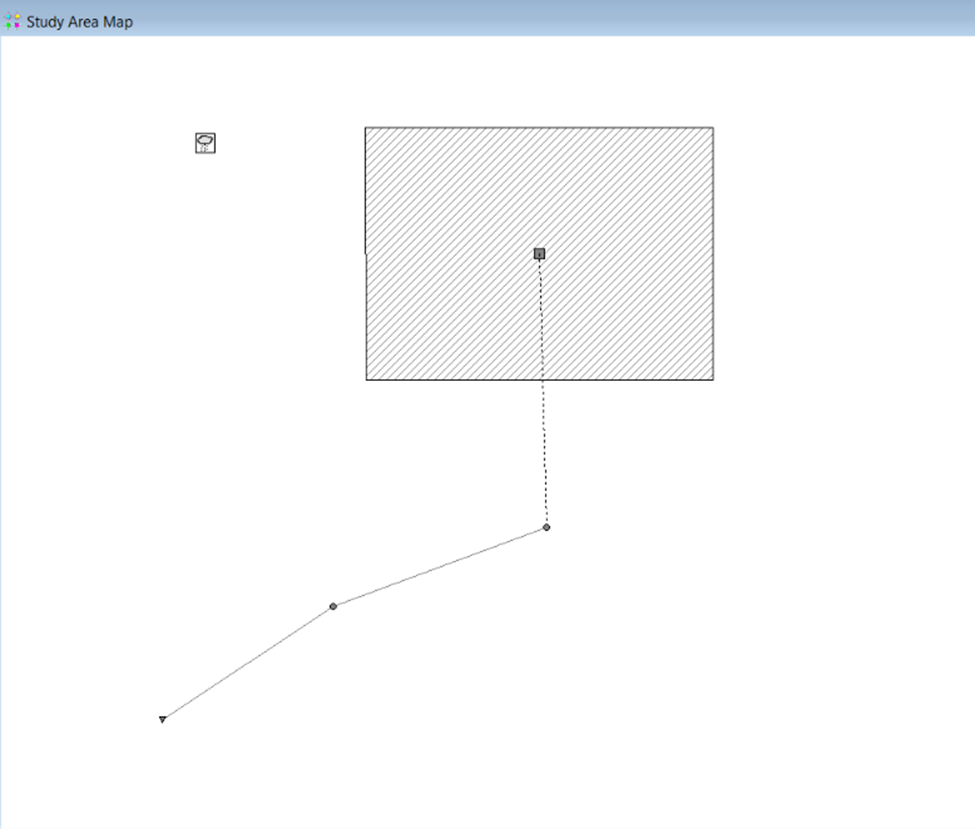
A stormwater drainage model was developed using EPA SWMM to simulate runoff and flow behavior during rainfall events.
The SWMM model consisted of:
- Rain Gauge
- Subcatchment
- Junction Nodes
- Conduits
- Outfall
Rainfall intensity data, catchment properties, and conduit dimensions were provided as input to the model. Dynamic wave routing was selected for flow simulation.
Figure 2: EPA-SWMM Drainage Model Layout
Step 5: Simulation and Flood Analysis
The SWMM model was simulated under design rainfall conditions to evaluate hydraulic performance of the drainage system.
The simulation results were analyzed using:
- Node flooding maps
- Link capacity plots
- Flow hydrographs
- Water depth variations
The existing drainage system showed surcharge and overflow conditions during peak rainfall periods.
Step 6: Improved Drain Design
To reduce flooding conditions, the drain dimensions and slope were modified.
| Parameter | Existing Drain | Improved Drain |
| Width | 1.2m | 2.5m |
| Depth | 0.9m | 1.5m |
| Slope | 0.0015 | 0.002 |
The improved model was simulated again using SWMM.
Step 7: Result Comparison and Validation
The hydraulic performance of the existing and improved drainage systems was compared using both manual calculations and SWMM simulation results.
The improved drainage system successfully conveyed the design runoff without overflow and significantly reduced flooding conditions.
Results
Hydraulic Calculation Results
The peak runoff generated from the selected urban catchment was estimated using the Rational Method, while the carrying capacity of the existing stormwater drain was determined using Manning’s equation.
The calculated peak runoff was:
Q=8.32 m3/s
The carrying capacity of the existing drain was:
Q=1.93 m3/s
Comparison of these values showed that the existing drain capacity was significantly lower than the required runoff discharge, indicating hydraulic inadequacy and possibility of flooding during heavy rainfall events.
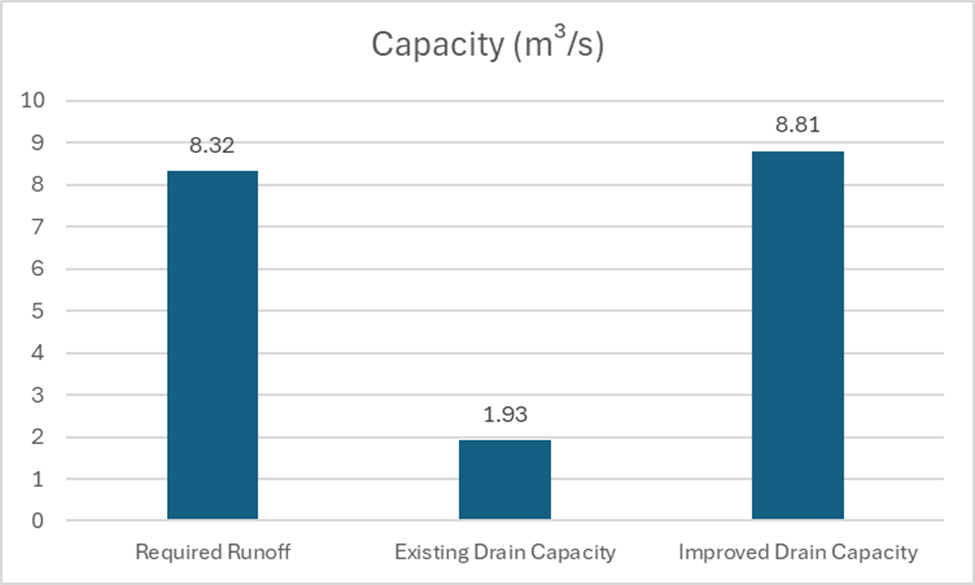
Figure 2: Comparison Graph of Required Runoff and Existing Drain Capacity
EPA-SWMM Simulation Results
The stormwater drainage network was simulated using EPA SWMM under design rainfall conditions. The simulation results indicated surcharge and overflow conditions within the existing drainage system during peak rainfall periods.
The node flooding map and link capacity analysis showed that several conduit sections were operating close to or above full capacity. Water depth and flow conditions increased rapidly during intense rainfall, resulting in temporary flooding within the drainage network.
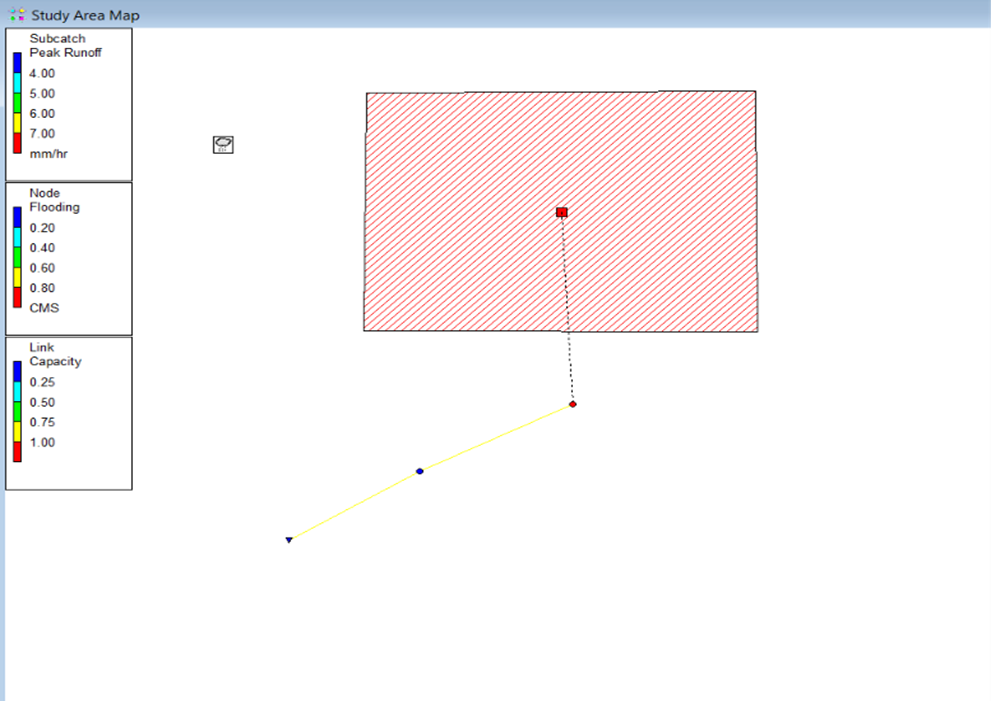
Figure 3: EPA-SWMM Simulation Result Showing Flooding/Surcharge Conditions
Improved Drainage System Results
To improve hydraulic performance, the drain dimensions and channel slope were increased and the SWMM simulation was repeated.
| Parameter | Existing Drain | Improved Drain |
| Width | 1.2m | 2.5m |
| Depth | 0.9m | 1.5m |
| Slope | 0.0015 | 0.002 |
| Capacity | 1.93m3/s | 8.81m3/s |
The improved drainage system successfully conveyed the design runoff without surcharge or overflow conditions. Simulation results showed a significant reduction in flooding and improved flow performance throughout the drainage network.
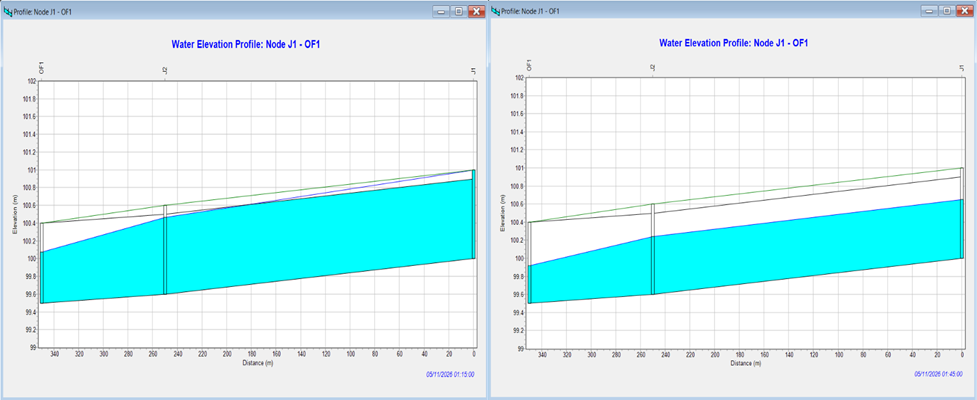
Figure 4: Comparison of Existing and Improved Drain Performance
Result Analysis
The study confirmed that the existing stormwater drain was hydraulically inadequate for handling peak runoff generated during heavy rainfall conditions. Manual calculations and SWMM simulation results showed good agreement in identifying flooding conditions and insufficient carrying capacity.
The improved drain design significantly increased discharge capacity and eliminated overflow conditions, demonstrating the importance of proper hydraulic design in urban stormwater management and flood mitigation.
Conclusions
- Peak runoff from the study area was estimated using the Rational Method.
- Hydraulic analysis using Manning’s equation showed that the existing stormwater drain was hydraulically inadequate.
- The existing drain capacity was lower than the required runoff discharge, causing flooding and surcharge conditions.
- EPA SWMM simulation confirmed overflow during heavy rainfall events.
- Increasing drain dimensions and slope improved hydraulic performance and reduced flooding.
- The project demonstrated the application of hydraulic analysis and SWMM modeling in urban stormwater management.
Future Scope
- Use real-time field data for more accurate analysis.
- Model larger urban drainage networks.
- Integrate GIS and smart flood monitoring systems.
- Study climate change impacts on urban flooding.
References
1.Flow in Open Channels, Tata McGraw-Hill Education, 2013
2.EPA Storm Water Management Model (SWMM) Official Documentation
3.Rainfall data references obtained from India Meteorological Department (IMD) and Open Government Data Platform India.
Team
Mentors
- Prakhyath V Shetty
- Anubhab Shaw
- Piyush Chouhan
Mentees
- P S Meghanad
Hydraulic Capacity Analysis (EPA-SWMM)
Tuesday, May 19 · 5:00 – 8:30pm
Time zone: Asia/Kolkata
Google Meet joining info
Video call link: https://meet.google.com/mtc-zfea-dbv
Or dial: (US) +1 402-848-0199 PIN: 642 823 716#
Report Information
Report Details
Created: May 19, 2026, 12:31 p.m.
Approved by: None
Approval date: None
Report Details
Created: May 19, 2026, 12:31 p.m.
Approved by: None
Approval date: None